
In the year 1752, the month of September had few missing days in its calendar. The reason was due to an assumption in the duration of an year. Pope Gregory XIII had a problem with Easter in the year 1582. According to the Julian Calendar that the church and large parts of the world followed, measure that an year consists of 365 days and 6 hours.
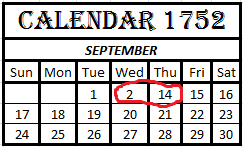
But the thing is that the above answer is not right. The length of an year is 365 days 5 hours and 49 minutes. So this 11 minute difference might not seem so much but when it is compounded over a period of 1300 years, it makes a big difference. So the areas and countries under his leadership had skipped a few days. But not all the countries accepted this in the beginning. In the year 1752, Britain and its colonies later adopted to this change and skipped 11 days in the year 1752, from September 3 through 13.
But Russia didn't adopt to the change till the year 1918 and Greece didn't adopt to the change till 1923. So ultimately these 2 countries had to skip 13 days instead of 11.
But the thing is that the above answer is not right. The length of an year is 365 days 5 hours and 49 minutes. So this 11 minute difference might not seem so much but when it is compounded over a period of 1300 years, it makes a big difference. So the areas and countries under his leadership had skipped a few days. But not all the countries accepted this in the beginning. In the year 1752, Britain and its colonies later adopted to this change and skipped 11 days in the year 1752, from September 3 through 13.
But Russia didn't adopt to the change till the year 1918 and Greece didn't adopt to the change till 1923. So ultimately these 2 countries had to skip 13 days instead of 11.

No comments:
Post a Comment